

Restore Circulation - Reverse Neuropathy
A non-invasive adjunctive therapy that helps podiatrists
improve healing, circulation,and outcomes
for routine and complex cases alike.
Better Outcomes Begin at the Tissue Level
Even with excellent podiatric care, circulation, oxygen delivery, and cellular energy
can limit how quickly patients improve.
When these factors are optimized, healing may accelerate, recovery may improve, and neuropathic patients
may experience better outcomes.
That’s where HOCATT’s multi-modal approach can make a meaningful difference.
Experience HOCATT Firsthand. See How It Can Benefit Your Patients.
HOCATT Clinical Progress: Efficacy Across Case Categories
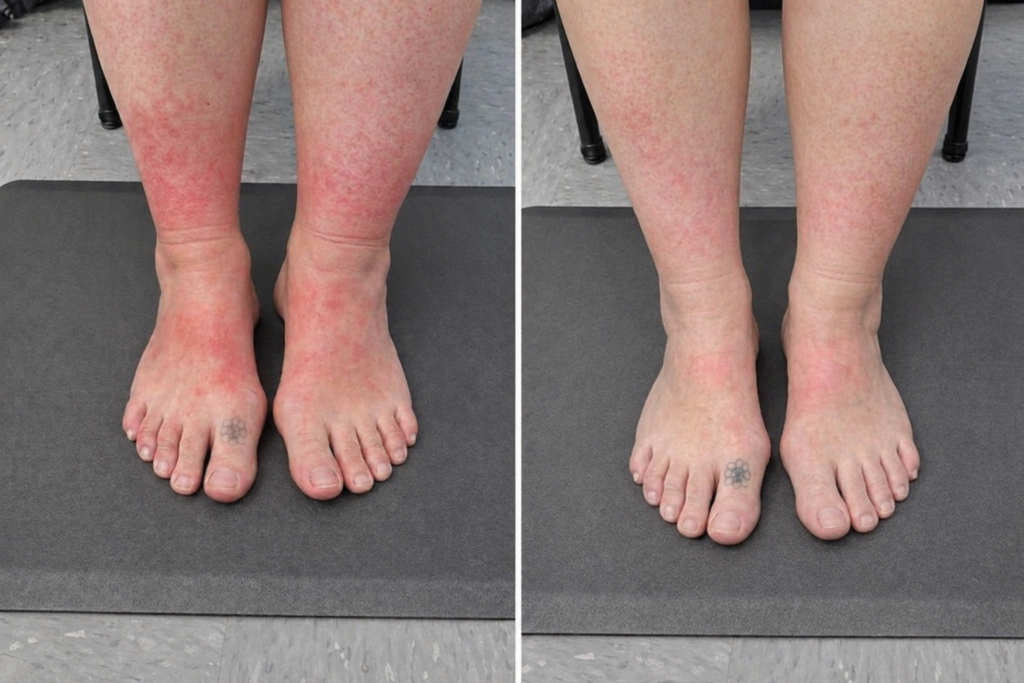
32-Year-Old Female with Type 2 Diabetes and Early Neuropathic Symptoms
Patient Experience
“I never expected to notice neuropathy this young. My feet would burn at night, and sometimes they felt numb or strangely sensitive during the day. After treatment, the burning eased and my feet felt more comfortable again.”
View Case Details
Over the prior 12 months, this patient began experiencing intermittent burning, tingling, numbness, and sensitivity in both feet associated with Type 2 diabetes. Symptoms gradually began affecting sleep quality, exercise tolerance, and confidence in her long-term foot health.
She remained under routine medical care and pursued additional supportive therapy after noticing symptoms becoming more frequent.
She completed an 8-session HOCATT protocol over 4 weeks designed to support circulation, oxygen delivery, and cellular recovery.
Reported Improvements
- Reduced burning and tingling sensations
- Improved comfort while standing and walking
- Better tolerance for exercise and daily activity
- Improved overall foot comfort
- Greater confidence in managing long-term wellness
Outcome
Following treatment, she reported fewer neuropathic symptoms and improved day-to-day comfort. She now elects periodic maintenance sessions while continuing her ongoing medical care.
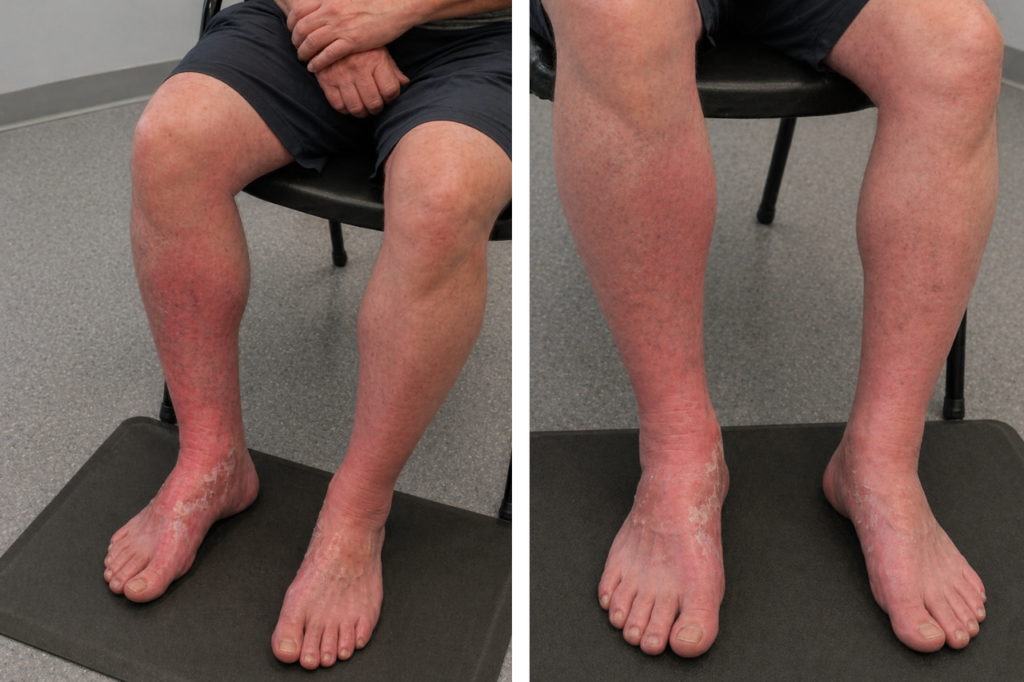
49-Year-Old Male with Sedentary Work, Early Venous Insufficiency, and Foot Ulcer Development
Patient Experience
“I sit most of the day, so I didn’t think much of it at first. But my legs started getting red and tight by the end of the day, and the skin around my ankles got really dry. Then I noticed a small sore on my foot that just wouldn’t heal. That’s when I knew something wasn’t right. After treatment, the redness calmed down and the sore finally started improving.”
View Case Details
This patient works long hours in a seated position and began experiencing progressive lower leg changes over 12–18 months.
On presentation, findings included:
- Diffuse redness from mid-calf to ankle, more pronounced on one side
- Mild dependent swelling, worsening later in the day
- Dry, flaky skin around the ankle and dorsal foot
- Uneven skin tone with early venous congestion
- Development of a small superficial foot ulcer, likely related to poor circulation and delayed skin recovery
- Subtle asymmetry between legs, suggesting uneven venous return
The patient reported heaviness, tightness, and warmth in the legs, especially after prolonged sitting. He also experienced tingling when standing up and increasing awareness of skin sensitivity.
The foot ulcer had been slow to heal, with intermittent irritation and dryness around the area—consistent with impaired microcirculation and early venous insufficiency.
While still functional, he began adjusting daily habits due to discomfort and concern over the non-healing wound.
He remained under routine care and sought additional support to improve circulation, skin recovery, and overall tissue health.
He completed an 8-session HOCATT protocol over 4 weeks.
Reported Improvements
- Reduction in visible redness and venous congestion
- Less tightness and heaviness, especially at end of day
- Improved skin condition, with less dryness and irritation
- Progress in ulcer healing, with better tissue response
- Reduced tingling after prolonged sitting
- Improved comfort during daily activity
Outcome
Post-treatment, the patient demonstrated early but meaningful improvement. The lower legs appeared less inflamed and more stable in tone, with reduced swelling patterns.
The foot ulcer showed signs of healing progression, with improved surrounding skin quality and reduced irritation.
Overall, symptoms became more manageable, and the patient reported increased confidence in daily movement. He continues periodic sessions to support circulation, skin integrity, and long-term prevention of recurrence.
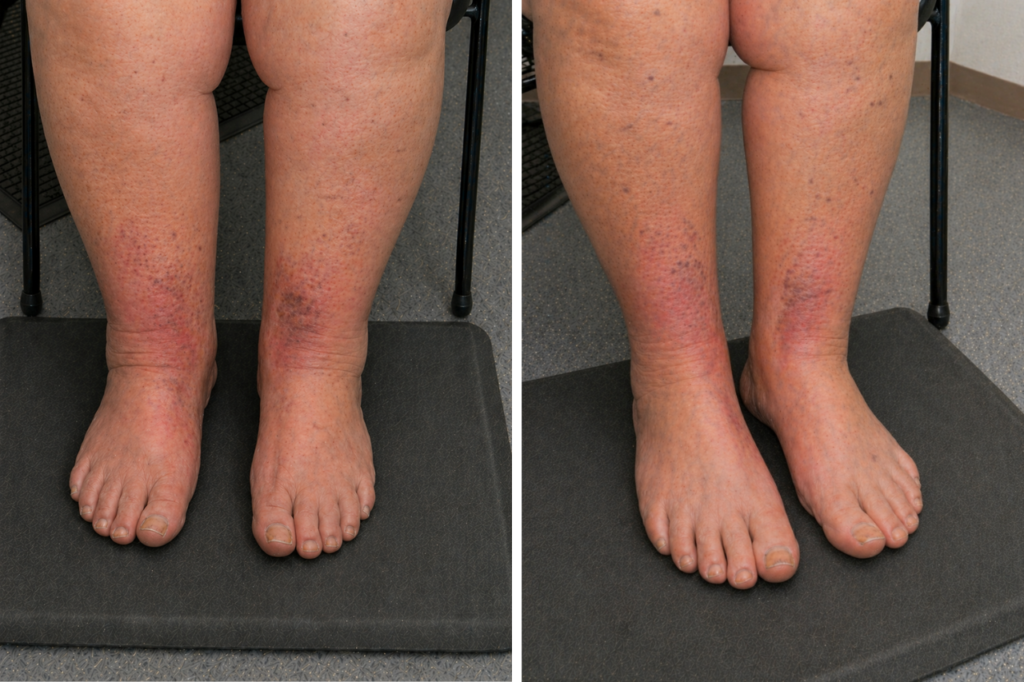
67-Year-Old Female with Obesity, Ongoing Ankle Swelling, and Skin Changes
Patient Experience
“My ankles would get really puffy by the end of the day, especially if I’d been on my feet. The skin looked darker and kind of blotchy, and it didn’t feel as soft as it used to. Sometimes even light rubbing from my shoes would leave marks that stayed longer than expected. After treatment, they didn’t feel as tight, and I noticed they looked a bit calmer.”
View Case Details
Over the past few years, this patient began noticing daily swelling in both ankles and lower legs, especially later in the day. Along with the swelling, the skin around her ankles developed reddish and purplish discoloration, with a patchy, uneven look and slightly rough texture.
She described a tight, heavy feeling around her ankles, and that her legs would look more irritated and darker by evening. Small things like sock lines or shoe pressure would leave marks that took longer to fade.
Because of her weight and reduced activity level, staying on her feet for long periods became uncomfortable. Some days her shoes fit fine in the morning but felt tight or restrictive later on.
She continued regular care with her doctor but wanted additional support to help with circulation, comfort, and how her legs felt day to day.
She completed an 8-session HOCATT protocol over 4 weeks.
Reported Improvements
- Ankles felt less tight and heavy, especially in the evening
- Skin looked less red and irritated overall
- Swelling still present, but more manageable day to day
- Less sensitivity to sock lines and shoe pressure
Felt more comfortable doing normal daily activities
Outcome
After treatment, her legs didn’t look or feel as inflamed at the end of the day. While not completely gone, the swelling and discoloration became less noticeable and easier to manage. She continues occasional sessions to help maintain comfort and keep symptoms from getting worse.
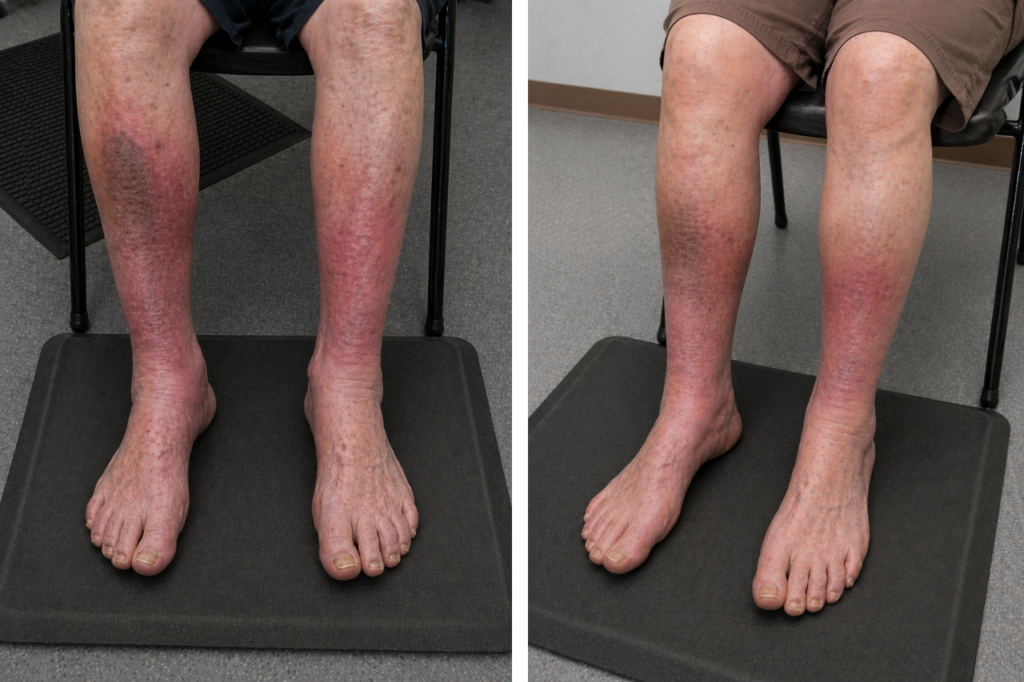
72-Year-Old Male with Venous Insufficiency, and Persistent Foot Sensitivity
Patient Experience
“I kept thinking it would settle down, but my left foot stayed red and sensitive. It felt heavier than the other one, especially after being on it for a bit. I noticed I was putting more weight on my right side without even trying. After treatment, it wasn’t completely gone—but it felt more balanced and easier to walk.”
View Case Details
Following a routine foot procedure, the patient experienced slower-than-expected recovery over 4 months, with ongoing symptoms affecting daily movement.
On presentation, the affected side (left) showed:
- Persistent redness extending from the foot into the lower ankle
- Mild swelling and visible heaviness compared to the opposite side
- Uneven skin tone with early stasis-related changes
- Subtle venous prominence and pooling, especially around the ankle region
- Guarded stance, with reduced weight-bearing on the affected foot
The patient reported burning and sensitivity while walking, along with a consistent feeling of pressure and heaviness, particularly later in the day—suggestive of underlying venous insufficiency contributing to delayed tissue recovery.
His medical history included age-related vascular changes and neuropathic symptoms, both of which can impair circulation, oxygen delivery, and normal healing response.
He remained under routine medical follow-up and pursued adjunctive therapy to support venous return, microcirculation, and post-procedure recovery.
He completed an 8-session HOCATT protocol over 4 weeks.
Reported Improvements
- Decrease in visible redness and venous congestion appearance
- Reduced heaviness and pressure sensation in the affected foot
- Improved weight distribution when standing and walking
- Less burning and sensitivity with movement
- Better tolerance for daily activity without early fatigue
Outcome
Post-treatment, the patient demonstrated early improvement in both vascular-related symptoms and functional movement. While mild discoloration and venous changes remained, the affected limb appeared less congested and more comparable to the contralateral side.
He reported greater confidence in walking and standing, with less need to compensate. Overall recovery became more consistent, supported by improved circulation and reduced symptom intensity.
The patient continues periodic sessions to help maintain venous support, comfort, and mobility alongside standard medical care.
A Targeted Approach to Restoring Oxygen
at the Tissue Level
To break through the ischemic barrier, oxygen must be delivered directly to compromised tissue—not just circulated systemically.
This is where a targeted, multi-modal approach changes the equation.
Improve Circulation in Compromised Tissue
Restricted microvascular flow can slow healing, reduce tissue quality, and prolong recovery. HOCATT’s multi-modal protocols are designed to support circulation at the capillary level, helping improve blood flow where patients need it most.
Clinical Relevance:
Ideal for patients with poor circulation, diabetic foot concerns, cold feet, delayed recovery, or tissue stress related to vascular compromise.
Support Neuropathy Recovery
Peripheral nerves rely on consistent oxygenation, circulation, and cellular energy to function properly. HOCATT therapies are designed to support the physiological environment nerves need for comfort, recovery, and healthier function.
Clinical Relevance:
Useful as an adjunctive option for patients experiencing burning, tingling, numbness, discomfort, or progressive neuropathic symptoms.
Enhance Wound Healing Conditions
Healing often slows when circulation, oxygen delivery, and tissue environment are compromised. HOCATT’s integrated therapies help support a cleaner, more oxygen-rich, pro-healing environment.
Clinical Relevance:
Applicable for patients managing delayed healing, chronic skin breakdown, difficult wound recovery, or tissue stress requiring additional support.
Accelerate Post-Procedure Recovery
Recovery outcomes are influenced by circulation, inflammation response, and cellular repair capacity. HOCATT protocols help support the body’s natural recovery processes following procedures or periods of tissue stress.
Clinical Relevance:
Ideal for post-surgical patients, regenerative procedure recovery, soft tissue healing, and patients seeking faster return to normal activity.
Partner with us & join our clinic network
Instead of relying on systemic circulation alone, this approach works at the level where healing actually occurs—the tissue.
Experience the combined power of advanced ozone, steam, PEMF, and transdermal CO₂ therapy—all integrated into one streamlined system. Support improved circulation, accelerate recovery timelines, and deliver more effective outcomes through a multi-modality approach.
What is HOCATT and how does it work?
HOCATT is a multi-modality therapy system that combines ozone, carbonic acid, infrared heat, and PEMF into one session. These therapies work together to support circulation, oxygen delivery, and cellular recovery at the tissue level—where healing actually happens.
How can this therapy support circulation in the lower extremities?
The combination of transdermal CO₂ and heat promotes vasodilation, helping improve microcirculation in areas where blood flow is often restricted—especially in the lower legs and extremities.
Is this beneficial for patients experiencing discomfort or sensitivity?
Yes. By supporting nerve function, reducing inflammation, and improving oxygen delivery, many patients experience reduced sensations such as tingling, numbness, or general discomfort over time.
Can it support recovery after procedures or tissue stress?
HOCATT helps create a more oxygen-rich, pro-healing environment, which may support faster recovery timelines and improved tissue repair following procedures or prolonged stress on the body.
Can this be combined with other treatments?
Yes. HOCATT is often used alongside other therapies to enhance overall outcomes—especially when focusing on circulation, recovery, and long-term tissue support.
Who is this best suited for?
This therapy is ideal for individuals looking to support circulation, improve comfort in the lower extremities, and enhance recovery—particularly when traditional approaches alone may not fully address tissue-level needs.